Knowledge Center

Guides for every treatment we do.

SMP, scar camouflage and hair transplants, each with its own library. Written by practitioners, not marketers.

0

Articles

0

Topics

Types of hair loss · Different types and treatments

Your guide to hair loss.

Not all hair loss is the same. The type decides the treatment — and whether SMP makes sense at all. Here are the eight types we see most, in plain language.

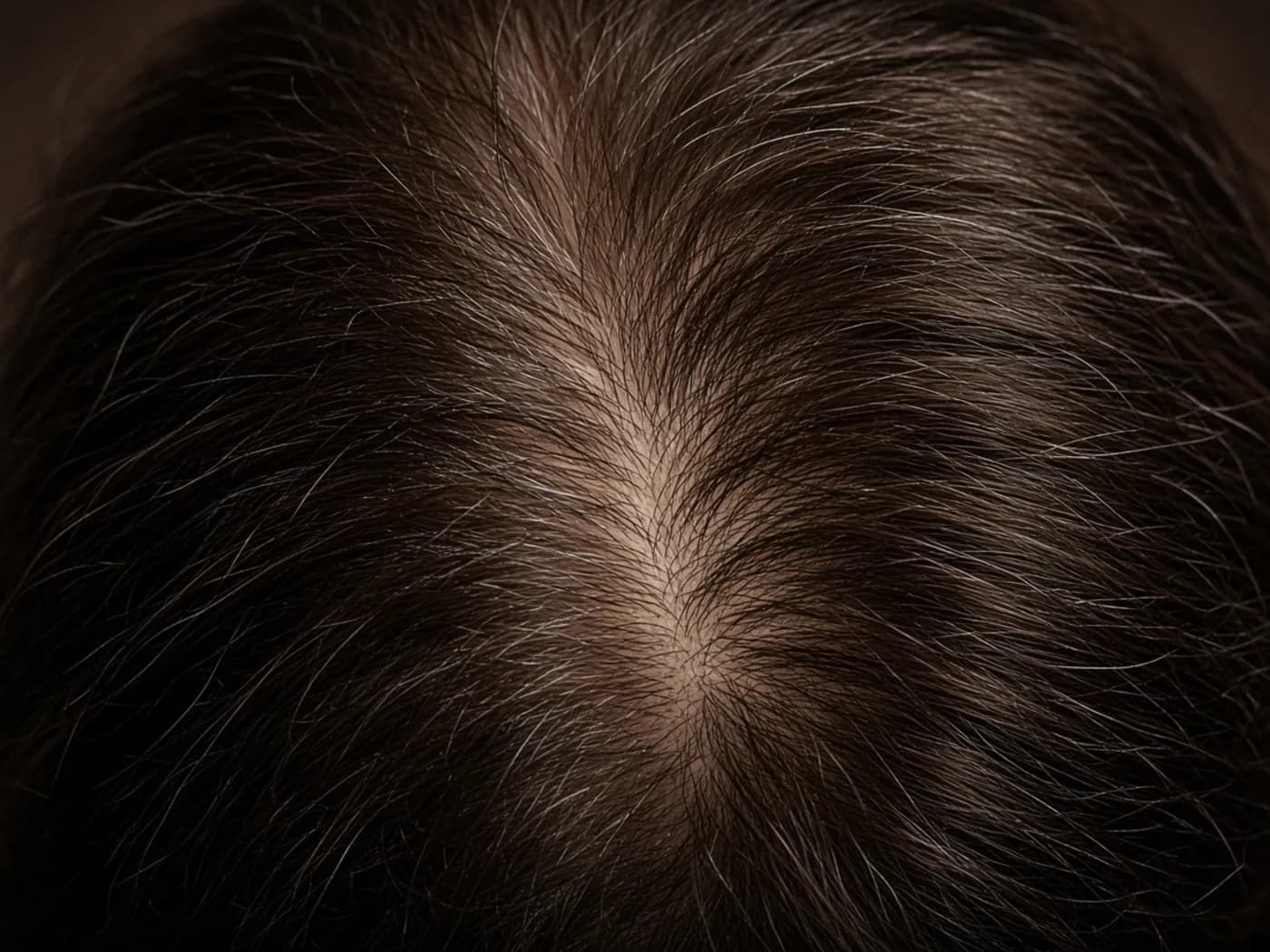
Top-down close-up of dark hair with a widening centre part — an overview of the different types of hair loss

Different types and treatments

Your guide to hair loss

Hair loss is an umbrella term. Some types are genetic and gradual, some are autoimmune, some are temporary shedding — and some are simply broken strands. Knowing which one you have is the first step to choosing the right treatment.

Start with a diagnosis. A GP or dermatologist can confirm the type, check bloodwork and rule out medical causes before anything cosmetic is planned.

The eight types

Where VANC fits

At your free intake we look at your scalp, your history and your photos, and tell you honestly which of these types you are likely dealing with — and whether SMP is the right next step.

Find out your type at a free intake

Educational content, not medical advice. Patchy, scarring, painful or sudden hair loss needs a GP or dermatologist first.

What are the main types of hair loss?

The most common types are male and female pattern hair loss (genetic), telogen effluvium (temporary shedding), alopecia areata and scarring alopecia (autoimmune), traction alopecia (tension), chemotherapy-related hair loss, trichotillomania (hair pulling) and breakage of the hair shaft. Each has a different cause and treatment.

Which types of hair loss can SMP help with?

SMP works best for stable pattern hair loss, long-standing alopecia areata, scarring alopecia that has been inactive for at least a year, permanent traction loss and scars. It is not suitable during active shedding, active autoimmune flares, cancer treatment or for simple breakage.

Will my hair grow back?

It depends on the type. Telogen effluvium, early traction alopecia and chemotherapy-related loss usually regrow once the trigger stops. Pattern hair loss can be slowed with treatment, while follicles lost to scarring alopecia do not return. A GP or dermatologist can confirm which applies to you.

Hairlines

Hairline Design: The Single Most Important Decision

7 min readMay 2026
Hairline Design: The Single Most Important Decision

A great hairline is a balance of geometry and irregularity. What a good designer measures — frontal point, temple angles, density gradient.

The Single Most Important Decision

Everything else in a hair transplant — graft count, technique, surgeon hands — can be world-class, and the result will still look fake if the hairline is wrong. The hairline is the part of the result the world sees first and forever.

The Anchor Points

A great hairline design measures and respects three anchor points:

  • The mid-frontal point — typically 7–10 cm above the glabella (the smooth space between the eyebrows), placed too low looks comical at 50
  • The frontotemporal angle — where the hairline meets the temple recession, usually a soft 30–45° wedge
  • The temporal peak — the point where the natural temple density returns
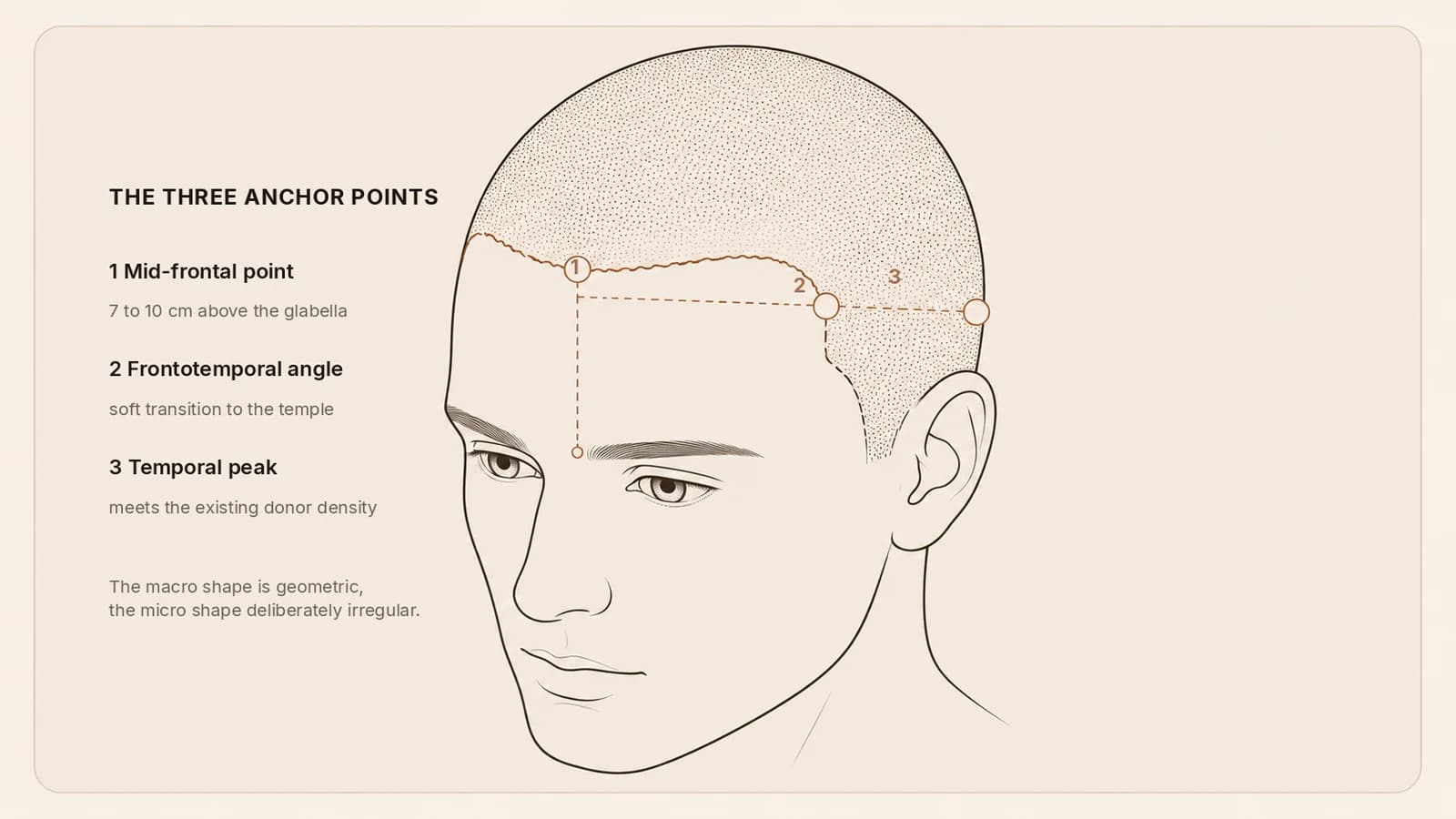
The three anchor points of a natural hairline design

Every good hairline starts at these three points. A ruler-straight line does not exist in nature.

Geometry vs. Irregularity

A hairline that is perfectly straight looks fake. A natural hairline has micro-irregularities: stray hairs that sit forward of the line, slight dips and rises, single-hair fronds that fade into the surrounding skin. A skilled designer plans the macro-line geometrically and the micro-line with deliberate, irregular randomness.

Density Gradient

The first row of a natural hairline is single-hair grafts. The second row is single + occasional two-hair. From row three onward, two- and three-hair grafts add density. Putting three-hair grafts at the front line is the single biggest mistake in cheap hair transplants — it looks like a doll’s hair.

Age-Appropriate Design

A 25-year-old wants the hairline he had at 18. We refuse it. Designed too low and too dense, that line ages badly: by the time the rest of the hair has receded behind it, the result looks like a wig. A great designer plans the hairline that will still look natural at 60.